






We have previously worked on the oldest Naruto and One Piece characters; only Bleach was the one among the big three that was remaining; for that reason, now we are here with the Oldest Characters In Bleach.
This list is not based on power or popularity but just on the proper age which is known or came from the story.
It focuses on who truly outlived history—characters whose age directly shaped the Soul Society, the Human World, and the cycle of life and death.
1. Soul King (Adnyeus) (millions of years)

The Soul King is not just the oldest character in Bleach — he is the foundation of reality itself.
Long before the Soul Society, Hueco Mundo, or even death as a system existed, the Soul King was sealed and mutilated to stabilize the universe.
The modern balance of souls is not natural; it is enforced through his eternal imprisonment.
Every arc in Bleach ultimately traces back to this original sin.
The Soul King’s age is immeasurable, and his suffering is infinite.
2. Ichibē Hyōsube (millions of years)

Ichibē existed before names themselves had meaning.
As the leader of Squad Zero, he predates the Soul Society and even the language as it exists today.
His power over names reflects his role as one of the first beings to impose order on chaos.
Ichibē represents a terrifying truth: the oldest beings in Bleach do not protect balance out of kindness — they enforce it out of necessity.
3. Yhwach (1,000+ years)

Yhwach is the son of the Soul King and the embodiment of rebellion against forced balance.
Born over a thousand years ago, he lived, died, and resurrected repeatedly, spreading his power across generations. His war against the Soul Society was not a conquest — it was a reclamation.
Yhwach’s age matters because he remembers a world before lies were institutionalised.
4. Ōetsu Nimaiya

Ōetsu Nimaiya forged the first Zanpakutō.
His existence predates the Gotei 13 and defines the very concept of Shinigami combat.
Every blade used in Bleach is a descendant of his creation.
Age gave Ōetsu mastery, but also detachment. He treats death casually because he helped industrialise it.
5. Tenjirō Kirinji

Tenjirō created Shinigami healing techniques.
He existed long before modern divisions and shaped how injuries, death, and recovery function in battle. His speed and arrogance reflect someone who has outlived consequences.
His age is felt in confidence rather than nostalgia.
6. Senjumaru Shutara

Senjumaru designs the very uniforms and tools of the Shinigami.
Her age is embedded in structure.
She did not fight wars — she built the systems that allowed wars to continue.
In Bleach, builders are often older than warriors.
7. Kirio Hikifune

Kirio introduced artificial soul technology.
Kirio Hikifune (曳舟 桐生, Hikifune Kirio) is a former captain of the 12th Division and a member of the Royal Guard, holding the title “Ruler of Grain“.
She holds the position of Second Officer of the Zero Division
Her work indirectly led to gigai, mod souls, and experiments that would later define characters like Urahara and Aizen.
Her age is tied to innovation that reshaped society.
8. Genryūsai Yamamoto (2,100+ years)

Genryūsai Yamamoto is the embodiment of ancient authority in Bleach.
He founded the Gotei 13 over two thousand years ago, during an era when Soul Society ruled through fear rather than order.
The original Gotei were not protectors — they were executioners, and Yamamoto was their undisputed center.
His flames did not symbolise justice; they symbolized destruction.
Yamamoto’s age represents stagnation born from success. His methods worked for centuries, which made him incapable of imagining a different future. By the time of the Thousand-Year Blood War, his refusal to adapt became his greatest weakness.
When Yamamoto falls, Bleach delivers a clear message: longevity without evolution leads to extinction.
9. Unohana Retsu (2,000+ years)

Unohana’s calm demeanor hides one of the bloodiest pasts in the series.
As the first Kenpachi, she lived in an age where survival depended entirely on killing.
Her long life forced her to confront the emptiness of endless combat, leading her to abandon her original identity and bury herself in healing.
Unohana’s age is defined by suppression.
She lived for centuries, denying who she truly was, carrying guilt as penance. Her final battle against Zaraki is not a return to violence — it is a release from it.
10. Shunsui Kyōraku (1,000+ years)

Shunsui inherited a system already rotting from the inside.
Having lived through Yamamoto’s rigid rule, Shunsui understood that tradition without compassion collapses under its own weight. His long life taught him flexibility, patience, and when necessary, moral compromise.
Unlike Yamamoto, Shunsui does not believe in absolute justice. He believes in survival with minimal loss.
His age matters because it allowed him to see both extremes — brutality and stagnation — and reject them.
Shunsui represents evolution within constraint.
11. Jūshirō Ukitake (1,000+ years)

Ukitake lived a long life in a fragile body.
Sustained by fragments of the Soul King, his existence was tied directly to the system he quietly questioned. His kindness was not weakness; it was resistance against a world built on cruelty.
Ukitake’s age reflects silent responsibility. He carried the burden of balance without authority, suffering without rebellion.
His death underscores one of Bleach’s cruelest truths: the gentlest often pay the highest price.
12. Aizen Sōsuke (hundreds+ years)

Aizen is not ancient by Bleach standards, but his awareness places him among them.
He lived long enough to understand that the Soul King was a lie — and refused to accept it. Unlike Yhwach, Aizen did not want to erase the world. He wanted to replace its foundation with conscious rule.
Aizen’s age matters because it shows that enlightenment does not require immortality — only clarity. His rebellion was ideological long before it became violent.
13. Kisuke Urahara (hundreds of years)

Urahara survived by staying ahead of the system.
He understood Soul Society’s flaws early and chose exile over submission.
His long life sharpened his intellect rather than hardening his ideology.
Unlike Aizen, Urahara does not seek control. Unlike Yamamoto, he does not cling to tradition. His age represents adaptive intelligence — survival through understanding rather than domination.
14. Mayuri Kurotsuchi (hundreds of years)
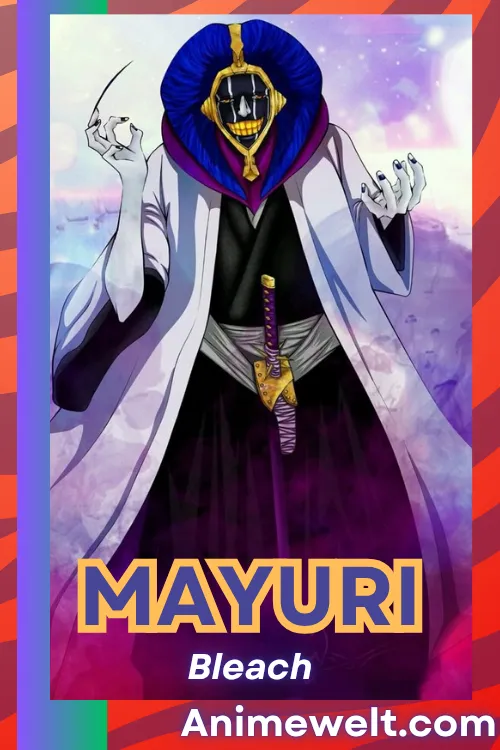
Mayuri represents longevity without conscience.
Time to him is not wisdom — it is opportunity. His experiments, ethics, and curiosity reflect a man who views life as material rather than meaning.
Mayuri’s age matters because he shows what progress looks like when morality is removed entirely. In Bleach, unchecked advancement is as dangerous as stagnation.
15. Barragan Louisenbairn (2,000+ years)

Barragan once ruled Hueco Mundo as its undisputed king.
His power over aging made him believe he was above time itself.
Yet his long reign bred arrogance, isolation, and blindness.
When Aizen dethroned him, Barragan learned the ultimate irony: time spares no one — not even those who command it.
Barragan’s fall is a warning. Longevity without humility guarantees collapse.
Final Thoughts
Bleach is not a story about life and death — it is a story about who controls the space between them.
The oldest characters in Bleach reveal a brutal truth: balance is not natural. It is enforced by beings who lived long enough to forget what freedom looked like.
Who is the oldest character in Bleach?
The Soul King is the oldest known being, existing since the dawn of reality.
Are Squad Zero members older than Yamamoto?
Yes. Squad Zero predates the Gotei 13 and Yamamoto’s leadership.Yes. Squad Zero predates the Gotei 13 and Yamamoto’s leadership.